


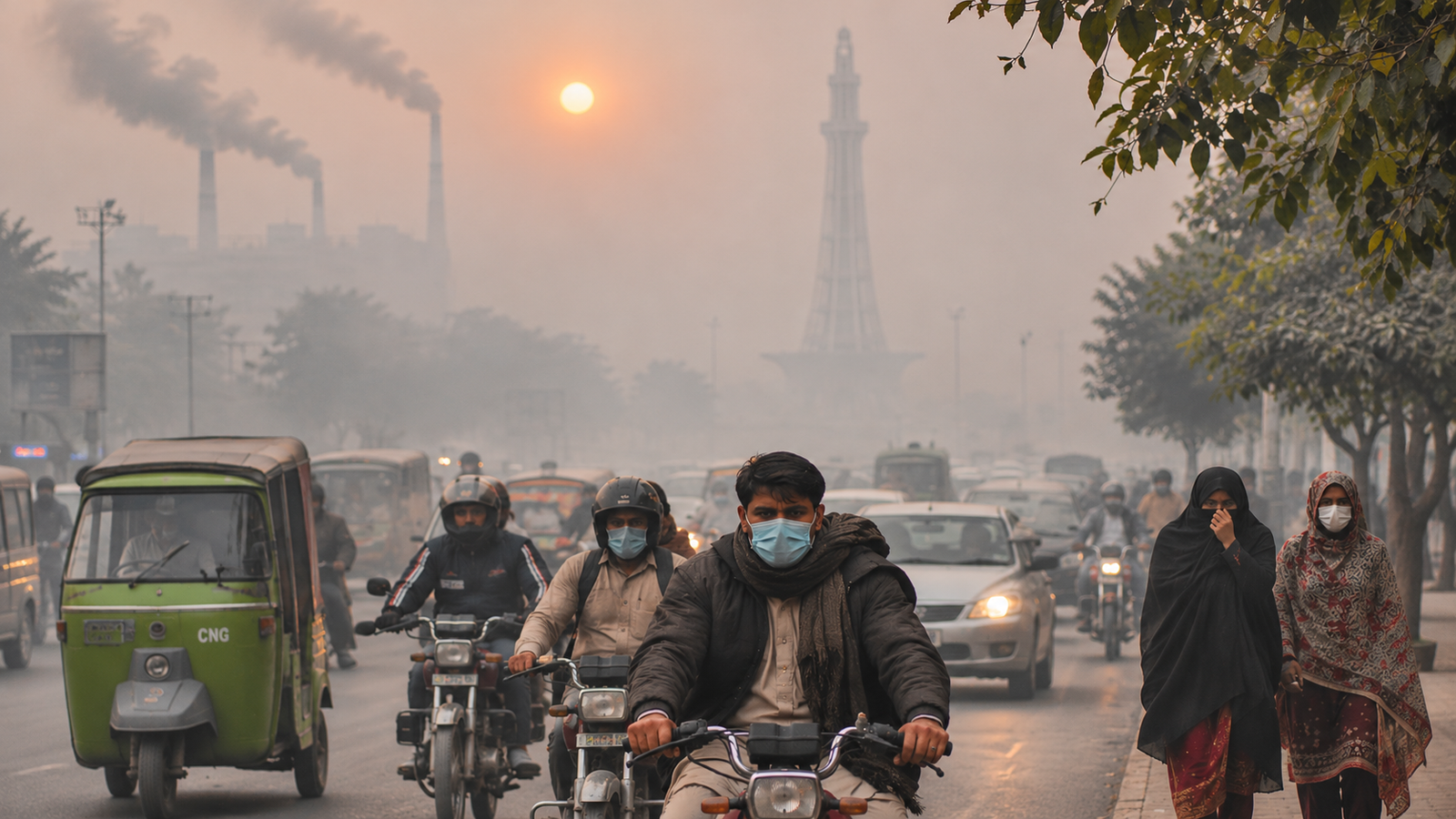
Lahore Tops Global Pollution Rankings as AQI Reaches 402
LAHORE: Lahore has once again emerged as the world’s most polluted major city, with its Air Quality Index (AQI) reaching 402 on Saturday morning, highlighting the severity of Punjab’s recurring winter smog crisis and its implications for public health.
According to IQAir data recorded between 8am and 9am, Lahore topped the international pollution rankings, followed by Kabul at 304, New Delhi at 277, Dubai at 168 and Kathmandu at 166.
Fine particulate matter (PM2.5) was identified as the primary pollutant in Lahore, with its concentration reaching 275 micrograms per cubic metre.
Pollution Levels Across Lahore
Several neighbourhoods recorded pollution levels substantially higher than the city’s overall reading.
- Allama Iqbal Town B: 671
- ARM monitoring station: 543
- ARC monitoring station: 461
- Bedian Thethar Road: 408
- Model Town A Block: 392
- Barki Road: 366
- DHA Phase 5, Block B: 297
- Askari 10: 267
Subsequent readings showed that pollution levels fluctuated throughout the day, with Lahore’s citywide AQI dropping to 293 by 1pm, although air quality remained very unhealthy.
Why Lahore Continues to Face Severe Smog
Lahore’s recurring air pollution crisis is associated with multiple emission sources, including motor vehicles, industrial activities, construction dust, agricultural residue burning and the combustion of fossil fuels.
During winter, atmospheric temperature inversions and low wind speeds can prevent pollutants from dispersing, causing their accumulation closer to ground level.
Rapid urbanisation, increasing transport demand and regional pollution further complicate efforts to improve air quality.
Serious Public Health Concerns
PM2.5 particles are particularly dangerous because their microscopic size allows them to penetrate deep into the lungs and potentially enter the bloodstream.
The World Health Organisation recommends an annual average PM2.5 concentration of no more than five micrograms per cubic metre and a 24-hour average of no more than 15 micrograms per cubic metre.
Prolonged exposure to elevated particulate pollution is associated with respiratory illnesses, cardiovascular diseases and other serious health complications.
Children, elderly citizens, pregnant women and individuals with asthma or existing heart and lung conditions are particularly vulnerable.
Residents are advised to minimise unnecessary outdoor activities, avoid strenuous outdoor exercise and wear properly fitted N95 or equivalent protective masks when outdoor exposure is unavoidable.
A Continuing Challenge for Punjab
Despite ongoing government initiatives to address industrial emissions, vehicle pollution and agricultural burning, recurring hazardous air quality highlights the scale of Punjab’s environmental challenge.
The latest pollution episode underscores the need for sustained emission controls, cleaner public transportation, improved industrial compliance, transparent air quality monitoring and coordinated regional action.